
Bibimbap
Originally proposed by System on Mar 5, 2026
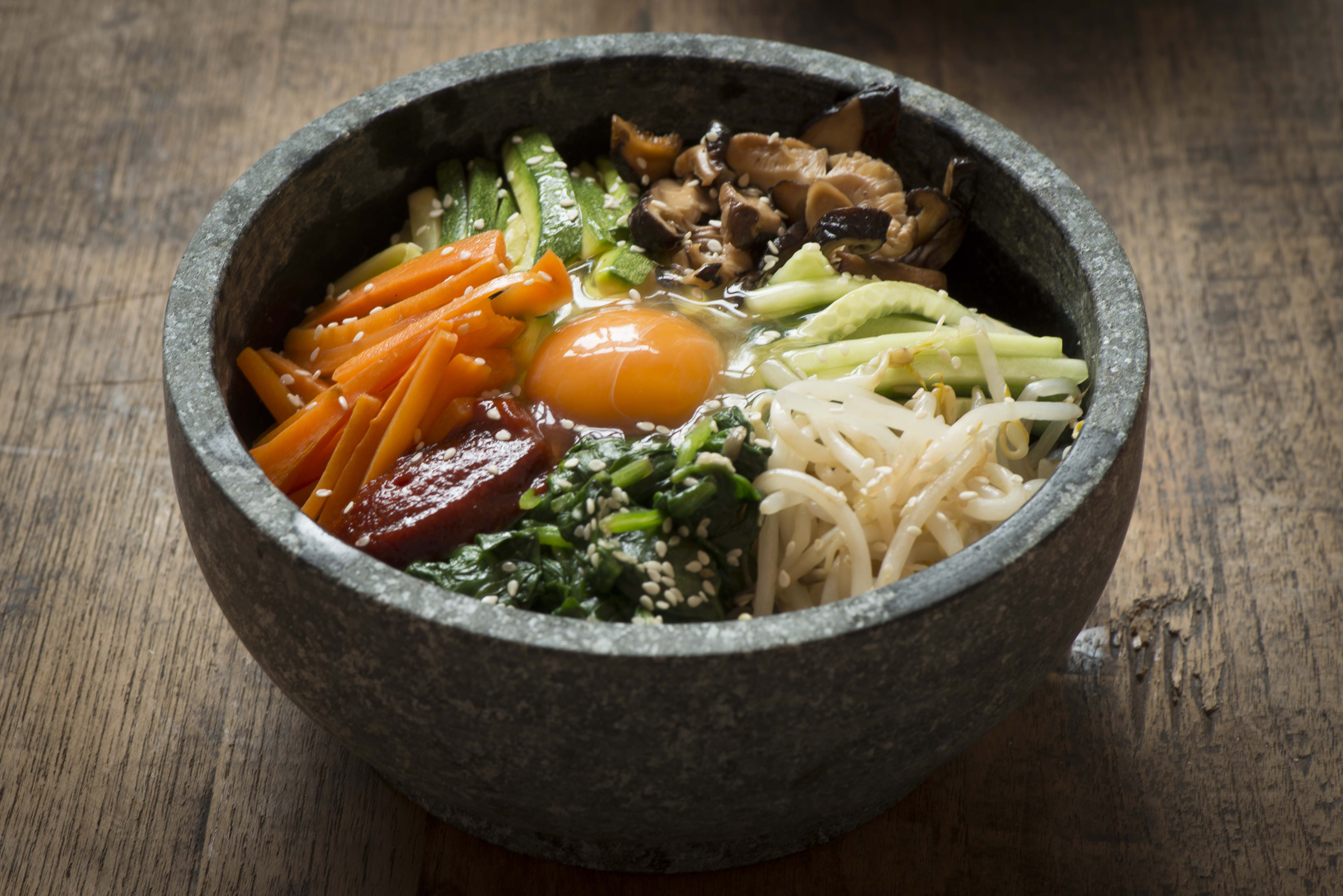
Source: Wikimedia
Bibimbap, sometimes romanised as bi bim bap or bi bim bop, is a Korean rice dish. It is served as a bowl of warm white rice topped with namul and gochujang. Egg and sliced meat are common additions, stirred together thoroughly just before eating. The term bibim means "mixing" and bap is cooked rice.
Source: Wikipedia (Bibimbap)
Separate seasoning of components preserves distinct flavors before mixing.
Colorful bowl with contrasting textures.
Ingredients
- 2 cups cooked short-grain rice
- 8 oz beef sirloin, thinly sliced
- 1 cup spinach
- 1 cup julienned carrots
- 1 cup bean sprouts
- 2 large eggs
- 2 tbsp gochujang
- 1 tbsp soy sauce
- 1 tsp sesame oil
- 1 tsp toasted sesame seeds
Method
- Cook rice and hold warm while preparing toppings.
- Season and saute each vegetable separately so each one keeps its own texture.
- Cook beef in a very hot skillet until browned and lightly caramelized.
- Fry eggs sunny-side up so yolks stay runny.
- Assemble bowls with rice, vegetables, beef, egg, and gochujang and serve immediately.
Why These Techniques Work
Browse techniquesComponent-by-component seasoning
Why it works: Each ingredient retains individual character.
Why this recipe uses it: Bibimbap is designed for contrast before mixing.
Starch and water management
Why it works: Controlling agitation and hydration determines whether grains stay separate or turn creamy.
Why this recipe uses it: Texture is the defining quality: distinct grains, cohesive body, or both as intended.