
Greek Salad
Originally proposed by System on Mar 5, 2026
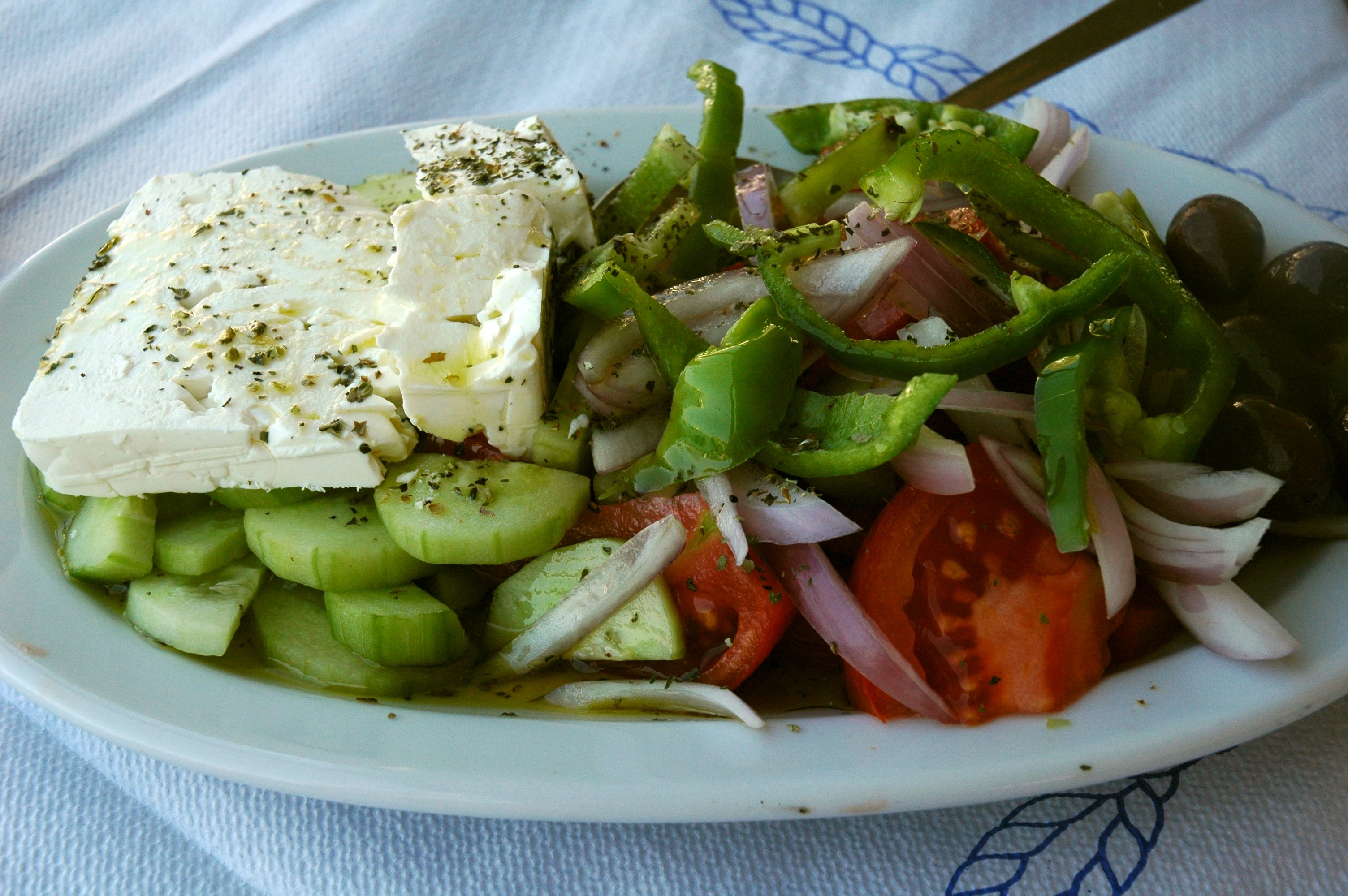
Source: Wikimedia
Greek salad, choriatiki or horiatiki is a salad in Greek cuisine generally made with pieces of tomatoes, cucumbers, onion, feta cheese, and olives and dressed with salt, Greek oregano, lemon juice and olive oil. Common additions include green bell pepper or caper berries. Greek salad is often imagined as a farmer's breakfast or lunch, as its ingredients resemble those that a Greek farmer might have on hand.
Source: Wikipedia (Greek salad)
Acidic dressing and salty feta balance juicy vegetables.
Bright, briny, and refreshing.
Ingredients
- 3 ripe tomatoes, cut into wedges
- 1 English cucumber, sliced
- 1/2 red onion, thinly sliced
- 4 oz feta, broken into chunks
- 1/2 cup Kalamata olives
- 3 tbsp extra-virgin olive oil
- 1 tbsp red wine vinegar
- 1 tsp dried oregano
- Kosher salt and black pepper, to taste
Method
- Cut tomatoes, cucumber, and onion into rustic chunks and place in a wide bowl.
- Whisk olive oil, vinegar, oregano, salt, and pepper until lightly emulsified.
- Dress the vegetables and toss gently, then let stand 5 minutes.
- Add olives and feta last so the cheese stays in larger pieces.
- Finish with another pinch of oregano and serve at cool room temperature.
Why These Techniques Work
Browse techniquesSeasoning tomatoes early
Why it works: Salt amplifies sweetness and aromatic perception.
Why this recipe uses it: It deepens flavor in a no-cook salad.
Acid, salinity, and texture balancing
Why it works: In no-cook dishes, contrast between acidity, seasoning, and texture drives flavor intensity and perceived freshness.
Why this recipe uses it: This recipe relies on bright seasoning and contrast instead of heat-driven browning for depth.